
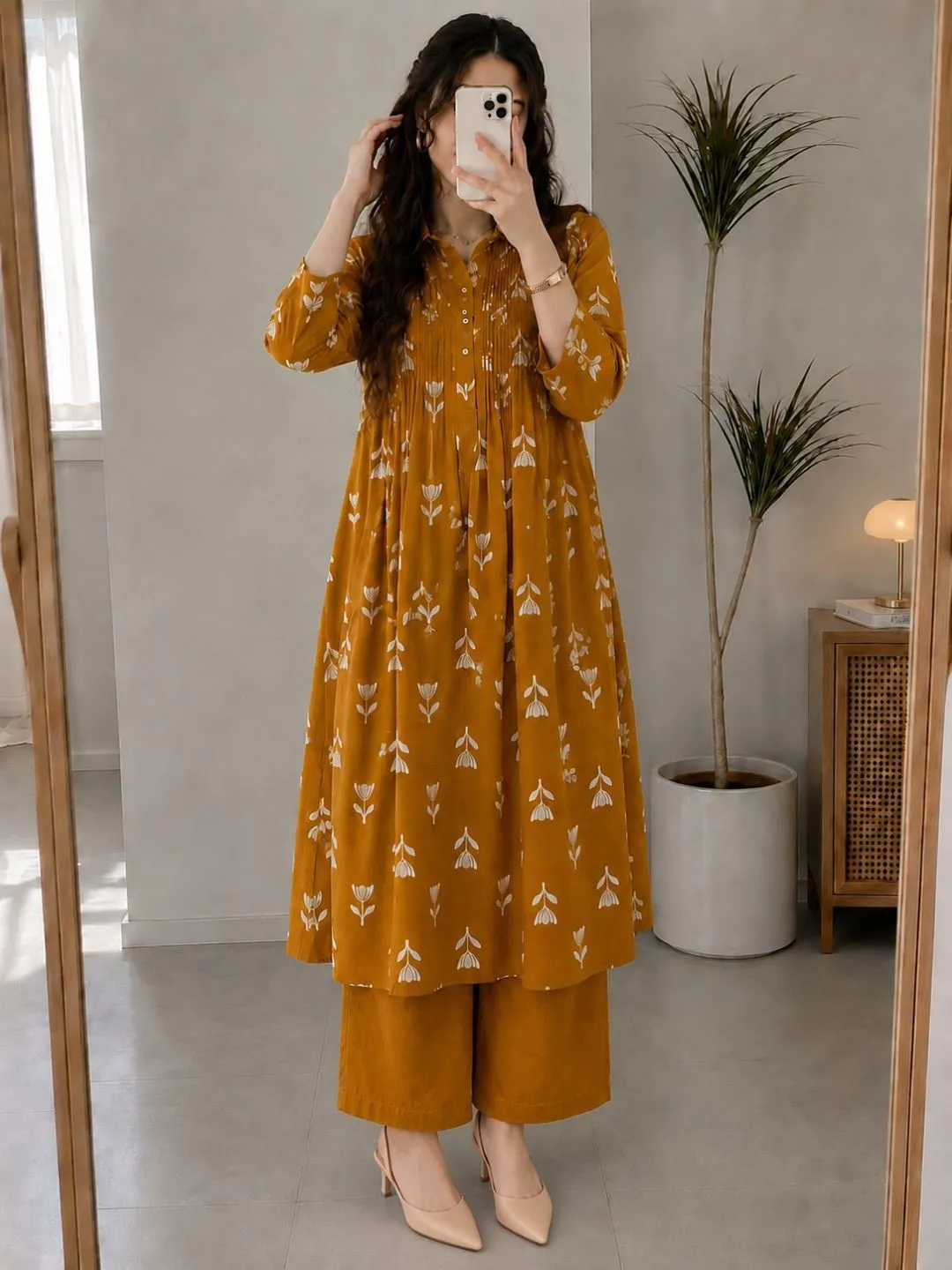
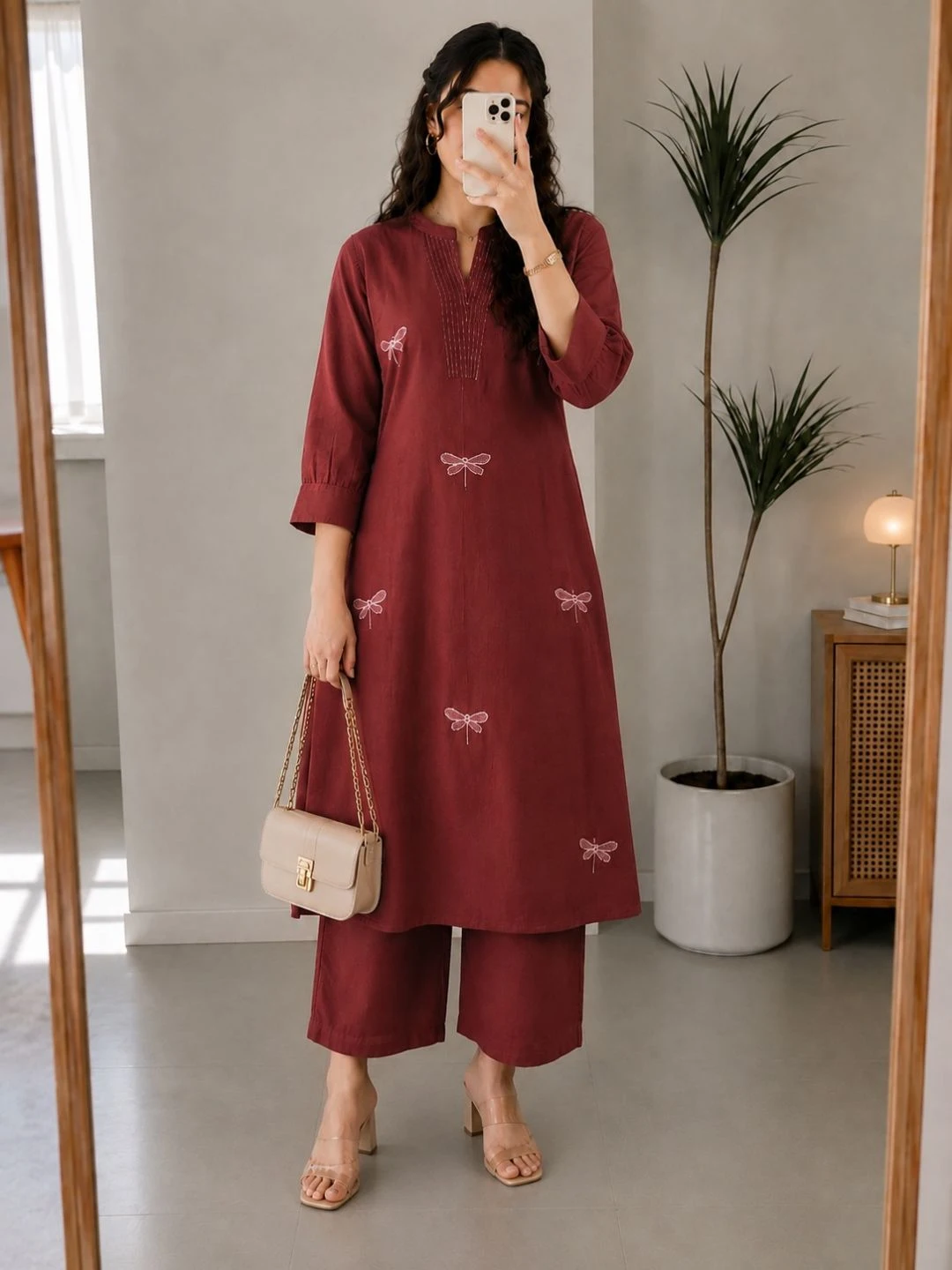
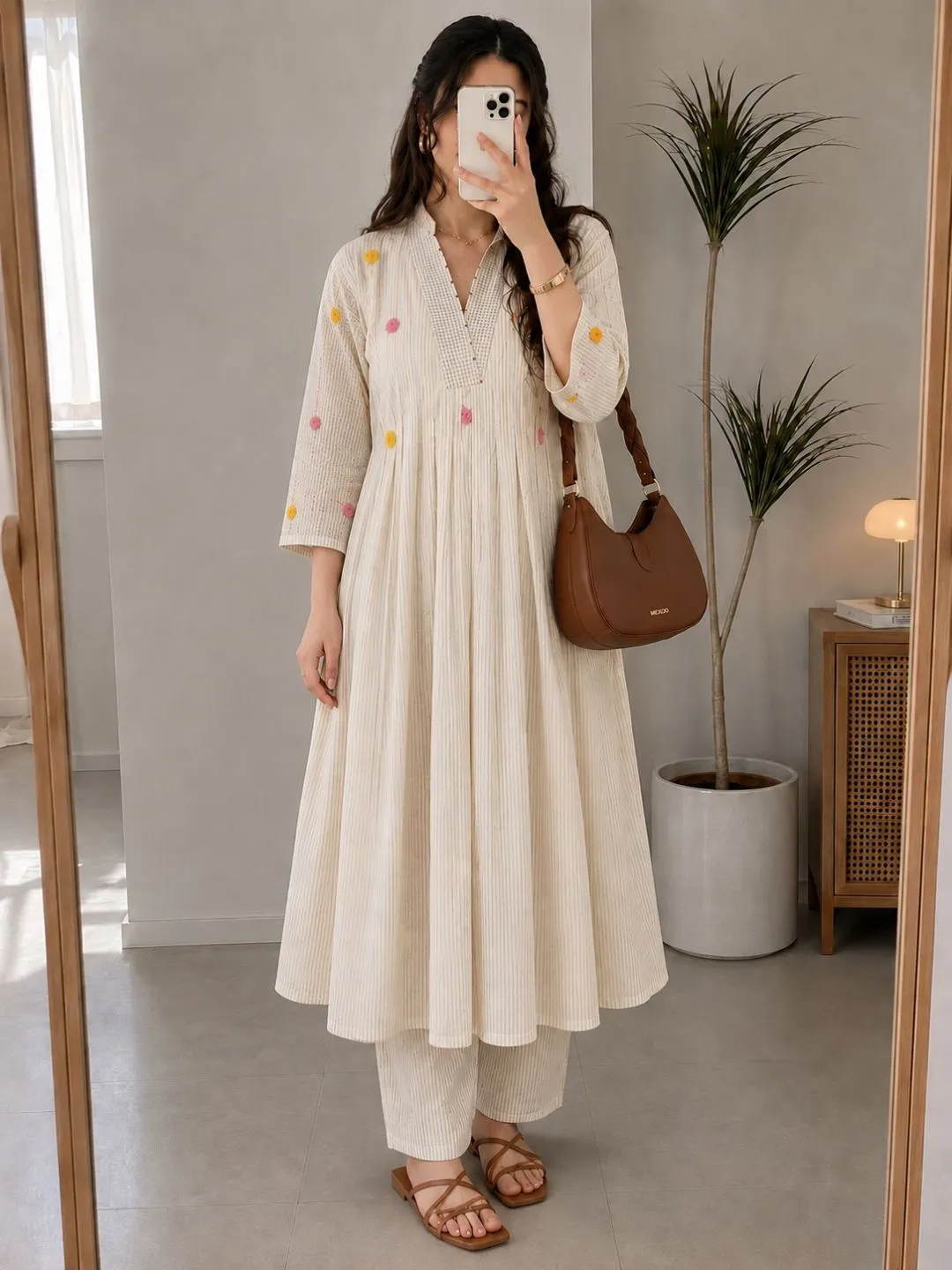
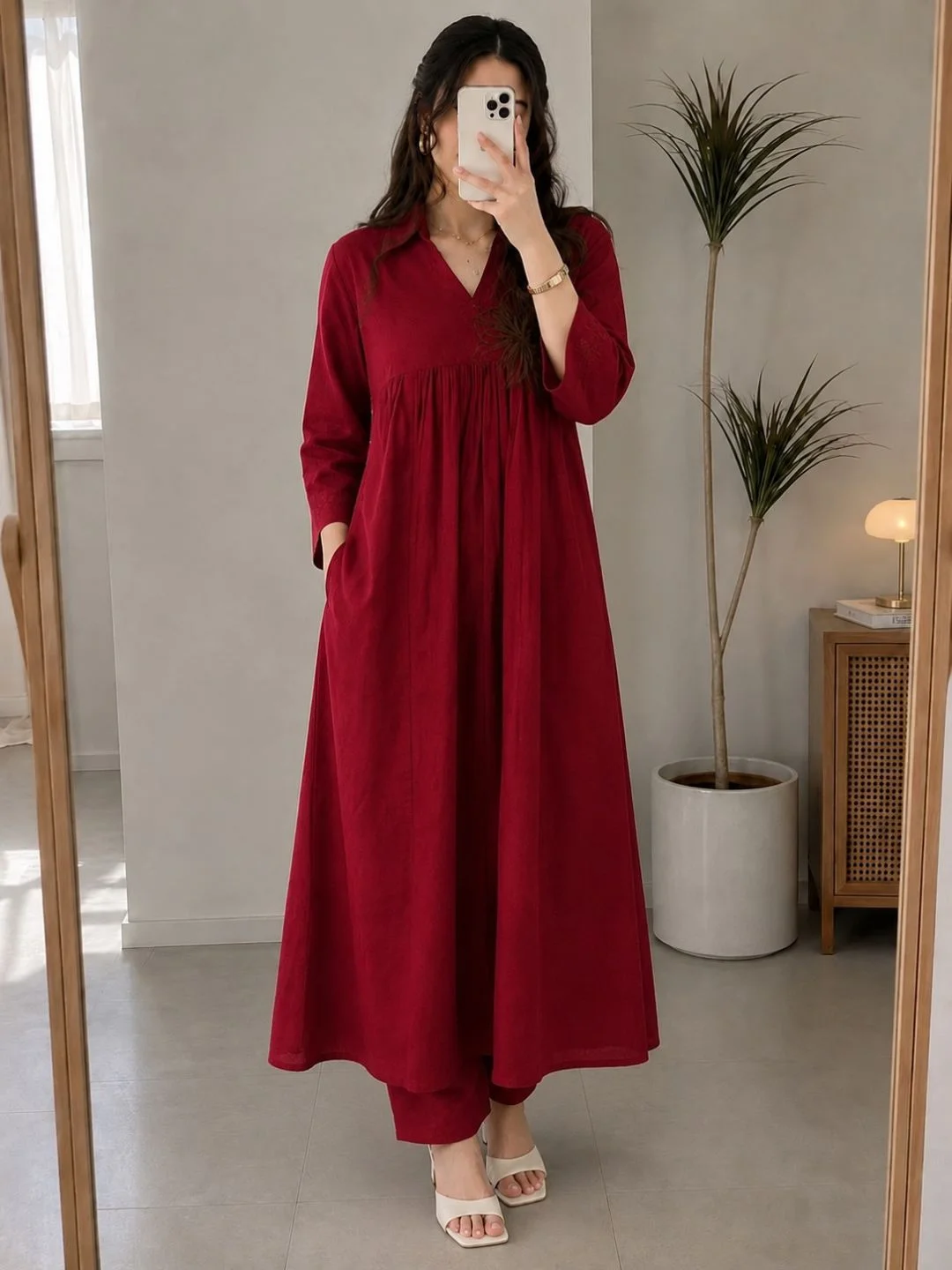
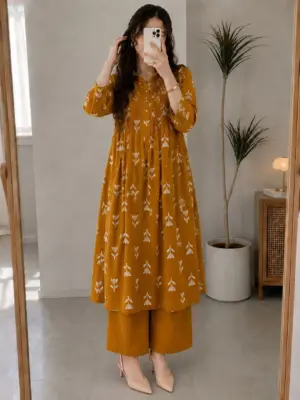
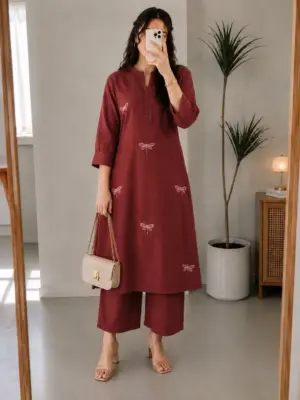
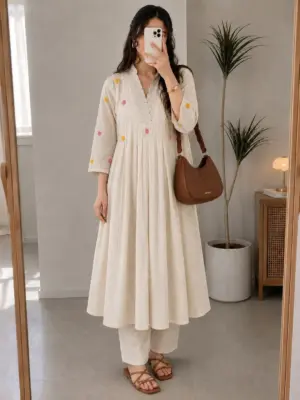
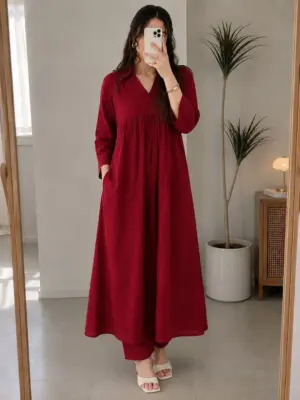
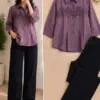
Mustard Floral Block-Print Kurta & Matching Palazzos Suit Set
Original price was: ₹699.00.₹119.00Current price is: ₹119.00.
Cash on Delivery Available | Limited Stock | Trending Style
Product Details:
- Product Type: 2-Piece Ethnic Kurta & Palazzos Set
- Outfit Color: Mustard Yellow / Ochre with Cream Floral Block Prints
- Sleeves: Full Sleeves
- Fit Type: Flared Pleated Silhouette & Relaxed Palazzos
- Neckline: Mandarin Collar with Front Button Placket and Pintucks
- Fabric: Premium Cotton Blend Fabric
- Pattern: All-Over Hand-Block Style Floral Motifs with Pleated Detailing
- Style: Ethnic Chic / Festive Traditional / Contemporary Ethnic Fusion
- Occasion: Festive Celebrations, Family Gathering, Daytime Functions
Elevate your traditional wardrobe collection with this captivating two-piece mustard ethnic set, showcasing a gracefully flared long kurta detailed with delicate cream floral block prints, chic pintuck accents along the front bodice, and paired seamlessly with matching wide-leg palazzos. Crafted from a soft, breathable, and premium-quality cotton blend fabric, this complete outfit ensures supreme all-day comfort without ever sacrificing an elegant, sophisticated silhouette.
Buying health insurance for senior citizens after retirement is a completely different ballgame compared to buying it in your 30s, and pretending otherwise is where most families go wrong. Insurers price these policies based on age-related risk, so premiums are naturally higher, and a lot of plans come loaded with conditions that catch people off guard if they don’t read carefully before signing.
Co-payment clauses are probably the biggest surprise for first-time buyers. Many senior citizen policies require you to pay a fixed percentage of every claim out of pocket, sometimes 10-20%, regardless of how large the sum insured is. It’s the insurer’s way of managing risk on an age group that statistically files more claims, but it also means your actual out-of-pocket cost during a hospitalization can be higher than expected even with a solid policy in place.
Waiting periods are the other thing to watch closely. Most conditions common in older age, like cataracts, joint replacements, or pre-existing illnesses such as diabetes and hypertension, come with a waiting period before they’re covered, sometimes stretching to two or three years. If your parents already have a pre-existing condition, buying the policy earlier rather than later reduces how long that waiting period actually delays real coverage.
| Size | 3XL, 4XL, L, M, S, XL, XS, XXL |
|---|
Leaving Comments
Leave a Comment
Related products

Sarees
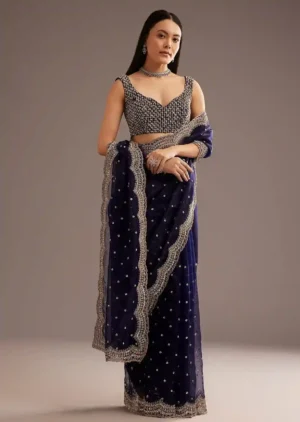
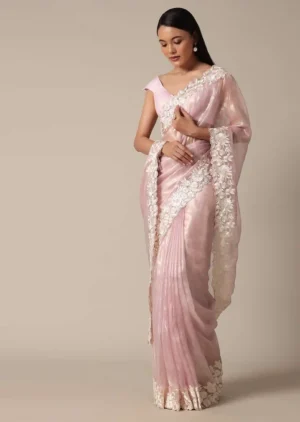
Midnight Reserve Organza Tissue Saree with Sequin & Cutdana Embroidery – Elite Glamour Portfolio
Reviews
There are no reviews yet.